Open 9:00 AM – 5:00 PM (Dec–Mar: until 4:00 PM) · Closed Thursdays (open on holidays)

Iwaseke House
Contact
Snow-covered Iwaseke House illuminated at night

National Important Cultural Property

Iwaseke House

Japan's Largest Five-Story Gassho-Zukuri

Three centuries, one hearth.

A house built some 300 years ago, over eight years.

The wisdom of ancestors who lived in harmony with the harsh nature of Gokayama. A one-of-a-kind cultural heritage that conveys the glory of the million-koku Kaga domain to this day. A special experience that awakens all your senses in living history, where the hearth fire continues to burn.

The Flow of History

History

From Jomon-era settlements to the hearth fire that still burns today — some 4,000 years have flowed through the valley of Gokayama.

  1. c.4000yrs ago

    Life in the Jomon Period

    Pottery from the mid-Jomon period has been unearthed in Gokayama, suggesting that people were already living here around this time.

  2. c.800yrs ago

    Gassho-zukuri houses in the mountain village of Gokayama

    Legend of the Heike Refugees

    Gokayama, where Iwaseke stands, is a valley surrounded by multiple mountain ranges. It is said that about 800 years ago, refugees from the Heike clan who lost the Genpei War fled to this remote location.

  3. c.400yrs ago

    Gokayama Becomes Part of the Kaga Domain

    From 1585, Gokayama came under the rule of the Maeda family of the Kaga domain.

  4. c.300yrs ago

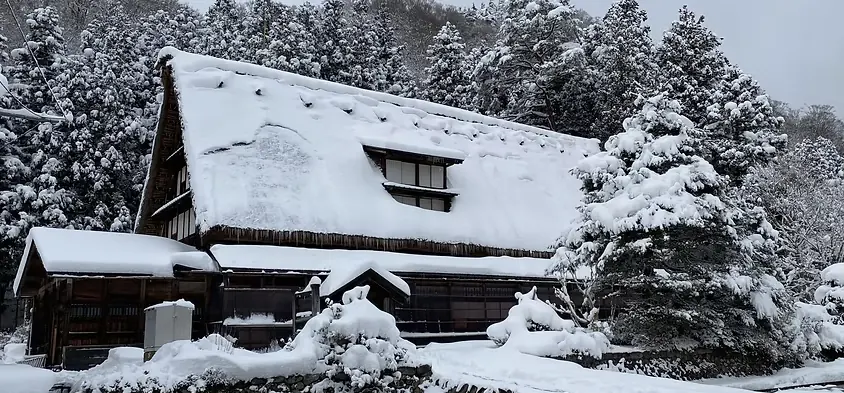
    Iwaseke House covered in snow

    Japan's largest five-story gassho-zukuri is completed

    Iwaseke was built approximately 300 years ago over a period of 8 years. It is said that Choemon Fujii, who was the "uwaniyaku" (senior official) responsible for collecting and delivering saltpeter (raw material for gunpowder) from Gokayama to the Kaga domain, built it to demonstrate the prestige of the million-koku Kaga domain to the Tenryo (shogunate territory) of Shirakawa-go in Hida.

  5. Meijiera

    A tatami room at Iwaseke surrounded by shoji screens

    A Family of 35

    It is said that until the Meiji era, 35 people including family and servants lived here, testament to the grandeur of what is considered the largest gassho-zukuri house.

  6. Tatami rooms leading to the Buddhist altar room

    1958May 14, 1958

    Designated a National Important Cultural Property

    Iwaseke was designated as a National Important Cultural Property on May 14, 1958.

  7. 1995

    Gassho-zukuri village surrounded by autumn mountains

    Gokayama's gassho-zukuri villages become World Heritage

    In December 1995, the gassho-zukuri villages of Suganuma and Ainokura, located near Iwaseke, were registered as UNESCO World Cultural Heritage sites as precious cultural assets to be preserved for future generations.

  8. Today

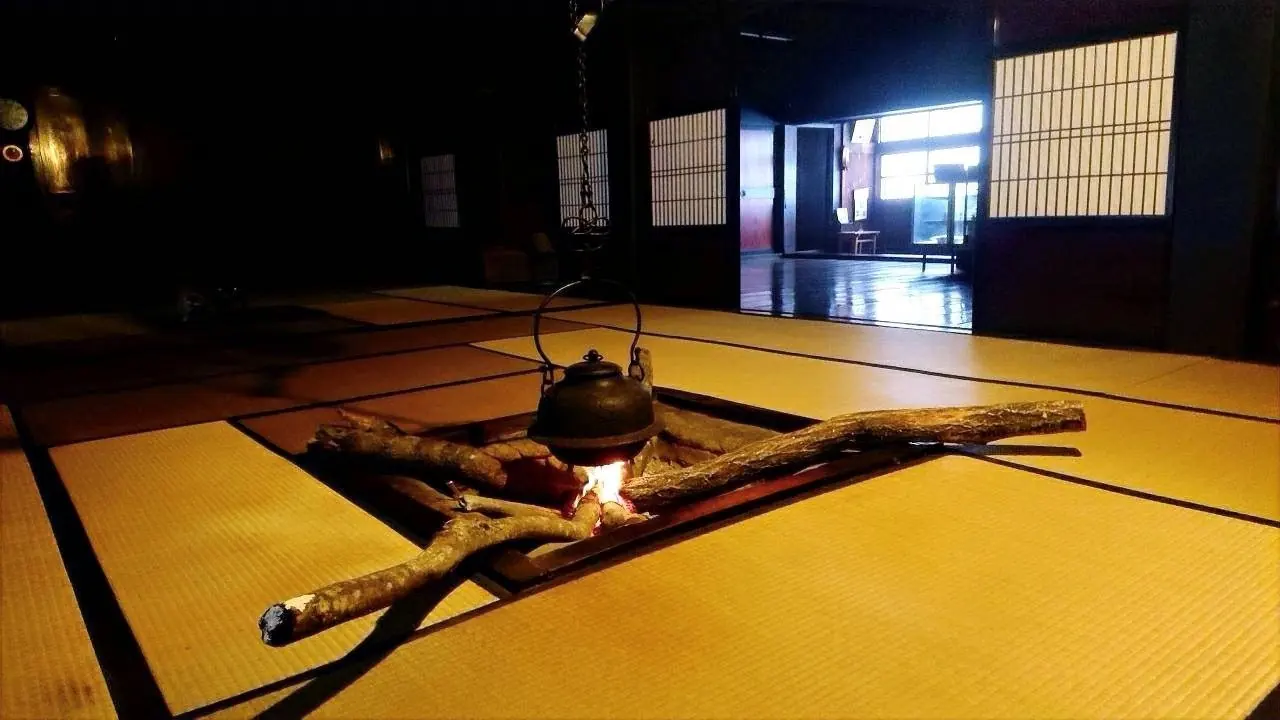
    The lit hearth with an iron kettle

    The hearth fire still burns today

    The remains of Iwaseke, preserved for about 300 years along with the beautiful mountain village landscape, continue to tell the story of our ancestors. In this space where the hearth fire burns and the smoke-blackened pillars and beams mark the passage of time, please reflect on the lives of those who came before.

Read the full history →

Architecture

Gassho-Zukuri Architecture

Not a single nail is used in the roof structure that supports the great five-story roof.

Exterior of the five-story gassho-zukuri Iwaseke House amid fresh greenery

Frontage26.4m

Depth12.7m

Height14.4m

3–5 F

Mainly used as workspace for silkworm cultivation.

2 F

Used as lodging for the workers.

1 F

Home to the hearth, the shoin study, and the 24-tatami reception room.

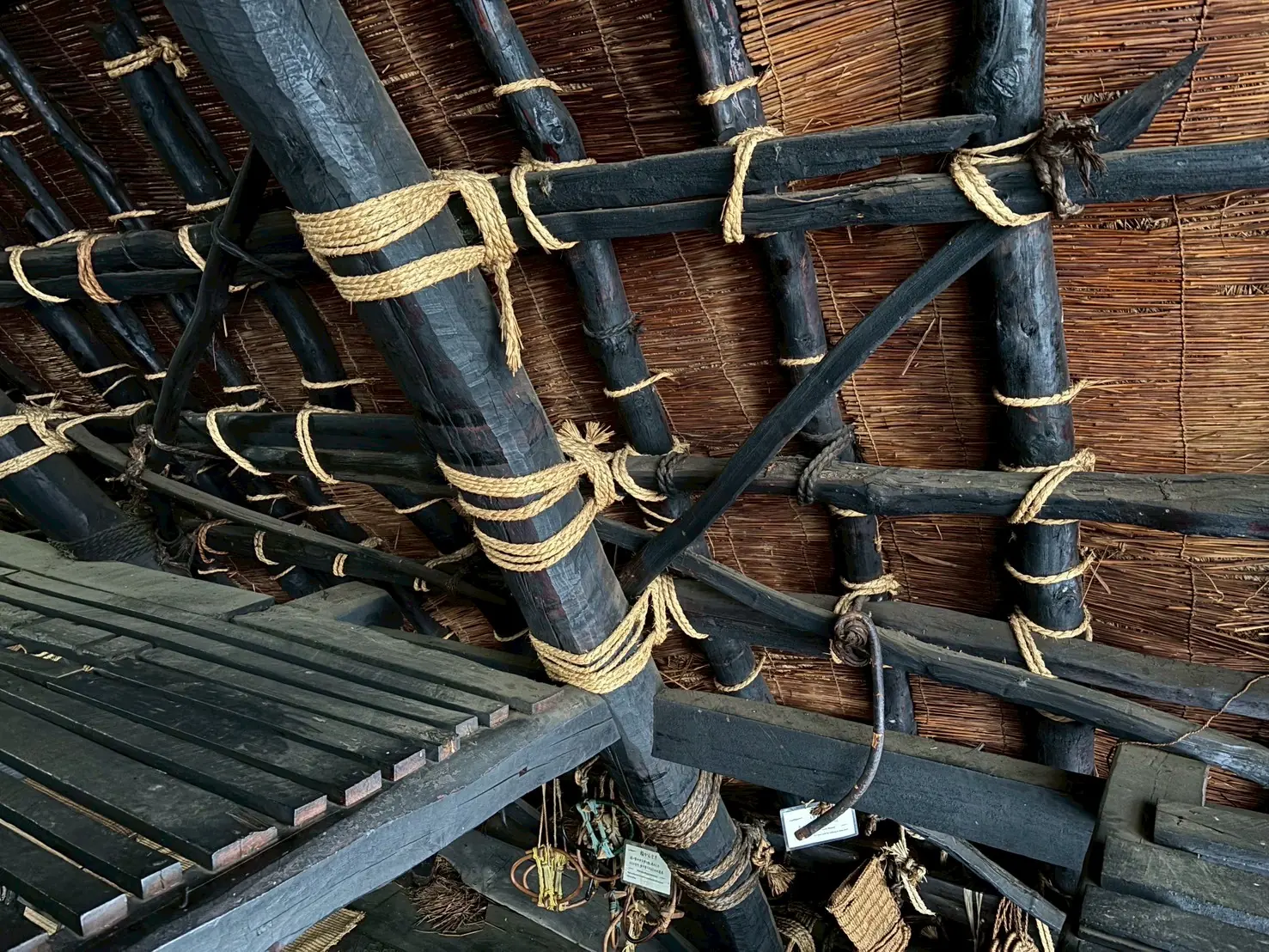
Roof framework tied with straw rope and neso

Zelkova

High-quality zelkova wood, precious even at the time of construction, was used abundantly for the pillars and beams.

Neso

Not a single nail is used in the roof structure. The roof, tied together with straw rope and twisted young witch hazel branches called "neso," flexibly absorbs the weight and movement of snow.

Soot

The pillars, beams, and straw ropes turn black from being smoked by the hearth. This provides insect-repelling and preservative effects, protecting the house.

Explore the architecture →

A Visit

Your Time at Iwaseke

The hearth that has burned for 300 years, with an iron kettle

I

Gather Around the Hearth

The hearth at Iwaseke continues to burn without ever going out. At the hearth, you can hear explanations about the region's history and about this house. Why not experience the passage of 300 years while feeling the actual warmth of the fire?

Interior of the shoin-style rooms

II

Step into the Shoin Rooms

Shoin-style rooms that convey the prestige of the Kaga domain. Even the floor boards of the 24-tatami reception room are made of zelkova wood.

Inside the upper floors of the gassho-zukuri

III

Walk the Upper Floors

The third to fifth floors were once used for silkworm cultivation. The floor boards are slatted so that the warmth of the hearth rises to the upper floors.

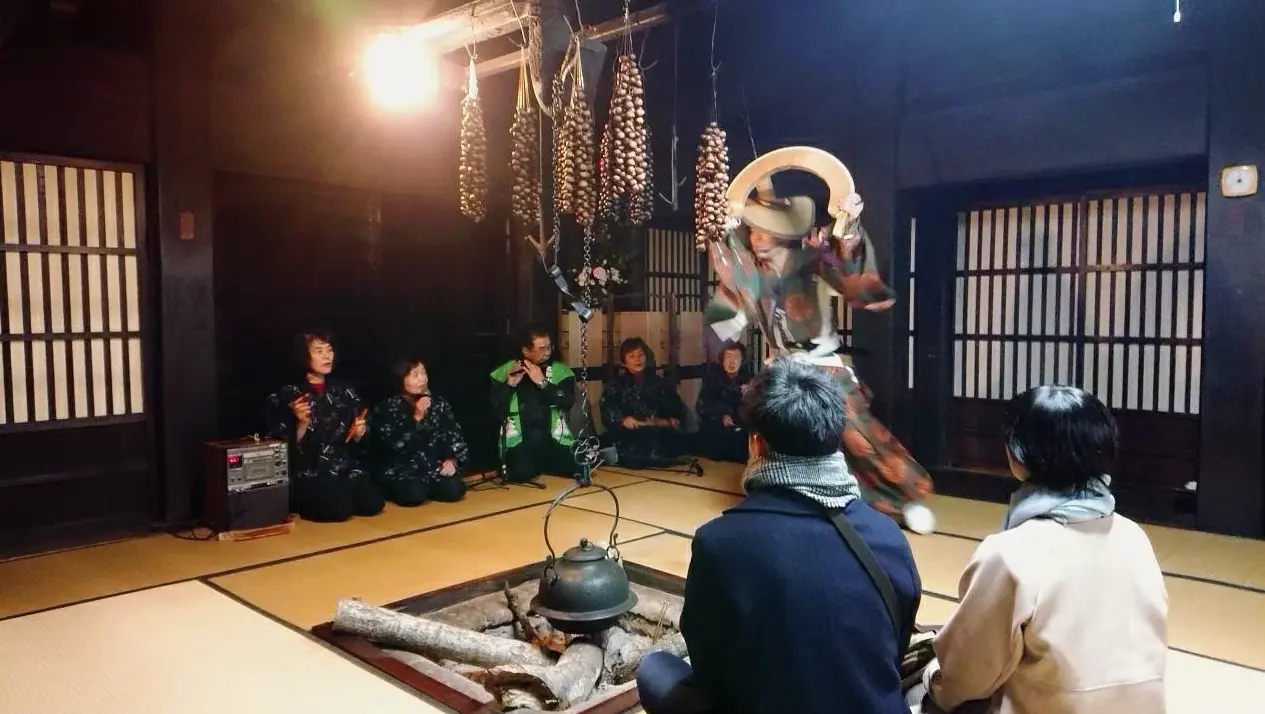
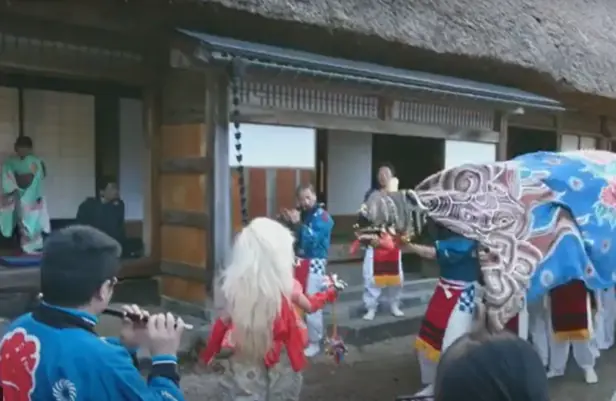
Gokayama folk song performance at the hearth

IV

Enjoy Kokiriko

"Kokiriko" is said to be Japan's oldest folk song, passed down in Gokayama since ancient times. Sasara dance performances are available for groups by reservation.

Inquire about performances

Four Seasons

The Changing Seasons

Autumn Foliage & Gassho

Autumn Foliage & Gassho

A breathtaking view created by the harmony of autumn foliage coloring the mountains and the gassho-zukuri houses nestled within.

Visit Information

Visitor Information

Opening Hours
9:00 AM - 5:00 PM (Last entry 4:30 PM)
(Dec-Mar: 9:00 AM - 4:00 PM)
Closed
Thursdays (Open on holidays)
Admission
Adults: ¥500 (Groups: ¥450)
Children: ¥300 (Groups: ¥250)
*Groups of 20 or more
By Car / Taxi
From Tokai-Hokuriku Expressway "Gokayama IC" About 3 min
*Free parking available (large buses OK)
By Public Transport
World Heritage Bus:Get off at "Nishi-Akao," 1 min walk
From Shin-Takaoka Station:World Heritage Bus: ~1h45m / By car: ~50min
From Shirakawa-go:World Heritage Bus: ~25min / By car: ~20min
Gokayama Folk Songs
By Reservation Only - Minimum 10 guests
Fee: ¥6,600 + (admission × number of guests)
Duration: About 15 min (CD accompaniment)

Questions

Frequently Asked Questions

What are the opening hours and admission fees?

Open 9:00 AM – 5:00 PM (until 4:00 PM from December to March). Closed on Thursdays (open on holidays). Admission is ¥500 for adults and ¥300 for elementary and junior high school students.

How long does it take from Shirakawa-go?

About 25 minutes by World Heritage Bus (1 min walk from the "Nishi-Akao" stop), or about 20 minutes by car.

How do I get there by car or train?

By car, about 3 minutes from Gokayama IC on the Tokai-Hokuriku Expressway. Free parking is available. By train, about 1 hour 45 minutes by World Heritage Bus from Shin-Takaoka Station.

Can I watch Kokiriko at any time?

Performances are for groups by reservation. Please call us with your preferred date, time, and number of guests.

View Visit Information
Iwaseke House covered in snow

Plan Your Visit

We Look Forward to Your Visit

Group visits and Kokiriko performance reservations are accepted by phone.

0763-67-3338